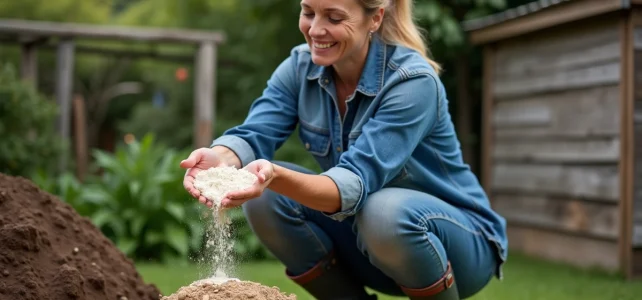
An abandoned bag of flour in a cupboard doesn’t make much noise, but it can quickly become a discreet headache. Thrown in hastily, flour immediately attracts unwanted visitors; tucked away in a composter, it leaves an uncertainty that few dare to address. Books on home composting remain silent on the subject, while some experts, more categorical, dismiss it outright for fear of microbial disorder or unexpected odors.
However, some gardeners allow themselves to sprinkle a handful of flour, well hidden among the dead leaves, without noticing any spectacular effect. The practice navigates between strict rules and discreet tolerances: adding flour to compost is a maneuver that requires finesse and discernment.
Flour and compost: key points before trying the experience
The question keeps coming back: can you put flour in compost or should it be kept away from organic waste bins? On one hand, flour, derived from cereal grains, is among the brown materials, rich in carbon. On the other hand, its fine and absorbent texture can quickly upset the balance of the pile, making it too dry or forming sticky clumps.
To act without unpleasant surprises, it is important to incorporate flour in moderation, never in large quantities, always well mixed with other residues, whether they are dead leaves, small branches, or torn cardboard. This mixture prevents impermeable clumps, slows the emergence of odors, and allows for the activity of microorganisms. Specifically, a pinch of flour now and then, spread and mixed in, integrates smoothly: the secret lies in moderation and vigilance.
If the material becomes pasty or compact, it is a sign that the mixture needs to be rebalanced immediately. Add airy materials right away, such as small sticks or old paper, to maintain moisture and air circulation. Compost requires a bit of finesse and regular attention, but flour should not be banned outright.
Flour in compost: instructions to avoid mishaps
Flour is intriguing: adding it to compost may seem risky, and it’s not entirely unfounded. It feeds bacteria well, but in excess, it disrupts the balance and can cause noisy, even smelly, fermentations. To take advantage of its benefits, it is enough to establish a few simple habits.
Here are the points to watch if you want to give your flour a second life in compost:
- Avoid pouring flour in a heap: it’s better to spread it in a thin layer over the existing waste.
- Always mix it with other organic waste (peels, greens, torn egg carton pieces).
- If the consistency becomes sticky or dense, immediately add brown materials, such as twigs or paper.
Never pour flour containing additives, flavors, or fats: only raw and natural varieties are suitable for compost and do not alter its evolution. If you are using a worm composter, caution is even more essential. The worms appreciate the addition, but only in small doses. An overload disrupts their biotope and, in the long run, compromises the quality of the compost produced.
When integrated properly, flour contributes to the creation of quality homemade fertilizer without attracting pests. Add it as a moderate supplement and monitor the state of the mixture to stay on the right track.

Old flour: clever alternatives to reduce waste
An old bag of flour relegated to the back of a shelf offers much more than a vague hope for compost. Its great discretion actually masks an unexpected creative potential.
To give expired flour a second chance, several options are available to you. Here are some concrete examples that help avoid waste:
- Make homemade play dough: flour, water, a dash of olive oil, and the afternoon turns into a creative workshop, safe for children.
- Prepare a natural glue: a quick trip to the stove with water yields a perfect solution for crafting or starting paper mache.
- Absorb bad odors: sprinkle it at the bottom of the trash can or refrigerator bin to neutralize persistent smells.
- Use as a repellent: in the vegetable garden, a thin film on the leaves prevents insect colonies from settling, without harming the soil.
Others use it for supplementary care: flour applied as dry shampoo or a purifying mask offers a minimalist alternative to conventional cosmetics, without controversial substances. From the bathroom to the garden, through the workshop or kitchen, valuing downgraded flour becomes a gesture that is both clever and responsible. Less waste, more resources, a new logic of domestic inventiveness takes hold.
Asking about the place of flour, in the garden or at home, is to accept the search, to try, to adjust. By treating it as a flexible material, sometimes useful, sometimes to be diverted, one discovers the full interest of a subtle management of everyday materials. The old forgotten bag often ends up surprising where it is least expected.