
Self-service printing kiosks refuse certain file formats, despite the inscription “all media accepted.” In-store printing often requires a USB stick, while many services also offer document transmission via email or through a mobile app. The turnaround times vary: immediate printing or delayed pickup depending on the chosen method.
The availability of options heavily depends on the brand or store, with different prices and constraints from one chain to another. Preparing the document in the correct format significantly reduces the risks of errors or refusals during on-site printing.
Printing documents without a personal printer: what solutions are available in-store?
Printing a report, thesis, or even a few administrative papers without equipment at home has never been more accessible. In-store printing services have evolved to meet the increasing needs of those who do not have a printer at home. Going through a printing store or a large chain opens the door to high-performance printers, ready to handle any type of file.
Almost all major chains now feature a dedicated area: self-service kiosks, counters, or personalized assistance. You choose your options: black and white, color, single-sided or double-sided. The formats cover standard A4, but also posters or business cards. Files on USB sticks or documents sent via email depending on the store, everyone finds the method that suits them. The possibilities vary from store to store, but always with smooth support, whether via a kiosk or with the help of an employee.
For those who wish to print your documents at Leclerc, the process takes only a few minutes: you bring your files, set them up according to your needs, and then start printing. Payment is made on-site, at the kiosk or at the checkout, depending on the number or type of pages printed. This service covers both the occasional needs of individuals and the production of professional materials, such as posters or flyers.
The range of document printing services in-store meets both daily needs and more specific requests. Prices and terms change depending on the chosen medium or the expected finish, whether you opt for simple paper or a print on thick stock.
The Post Office, stationery stores, automatic kiosks: an overview of services accessible to the public
In many cities, the accessible printing service is progressing rapidly. The Post Office, for example, has quietly established itself in this sector. Several post offices now offer printing kiosks available to the public. These user-friendly devices allow for printing all types of documents, files, proofs, in black and white or color. The operation is done in a few steps: select the file via USB stick or send directly from a secure interface, choose the format (A4, A3), and then configure single-sided or double-sided. Card payment is straightforward, without needing to go to the checkout.
Office supply stores also hold a prominent place. Their main advantage? A wide range of printing services, from a simple page to the creation of bound documents, posters, or flyers. On-site, the teams assist with the setup: choosing the type of printing (black and white, color, double-sided), number of pages, selecting the paper.
On one point, they all have a common cause: the variety of printers available for self-service. In these spaces, speed and flexibility go hand in hand. You can print both official documents and communication materials at any time, without a minimum requirement. The widespread adoption of automatic kiosks has changed the game: everyone can easily access a reliable printing service, suitable for both daily routines and exceptional needs.
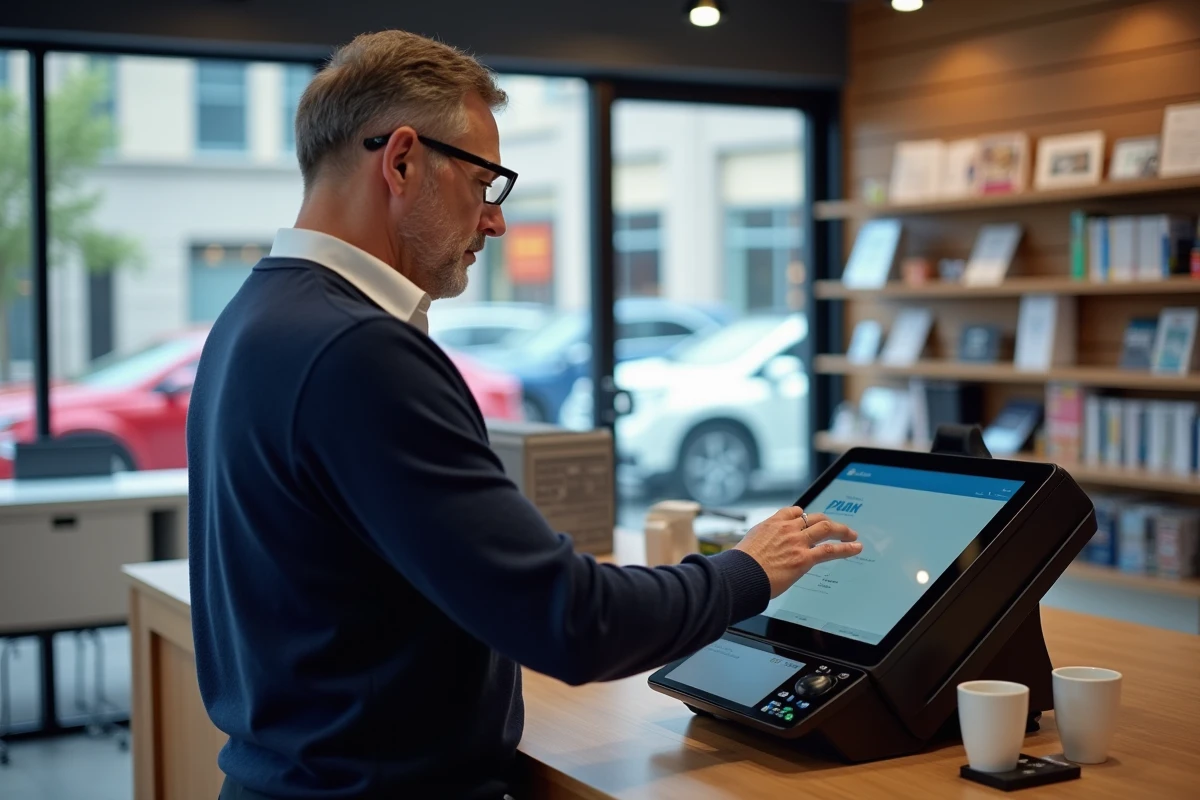
Preparing your files for hassle-free printing: practical tips and mistakes to avoid
Pay attention to file preparation
It all starts with the file itself, which determines the final quality. Adopt the PDF format: it ensures the stability of the layout and faithful reproduction of fonts. For images, PNG or JPEG may suffice, but they risk degrading the text or blurring graphic details.
Before transferring your printing files to a USB stick, a thorough check is essential: watch for errors, ensure that the margins are sufficient, and for graphic documents, include a bleed if necessary. The color mode is also important: for color, convert your file to CMYK (cyan, magenta, yellow, black) to avoid unpleasant surprises. In black and white, aim for a sharp contrast, without unnecessary gradients.
To simplify preparation, here are some habits to adopt:
- Check the resolution of images (300 dpi recommended).
- Ensure that the fonts are properly embedded in the PDF.
- Clearly indicate the desired final format (A4, A3…).
- Create a separate file for double-sided printing if the service requests it.
An organized USB stick saves valuable time on-site. Store your files in clear folders, name each document precisely. This rigor limits the risks of error when connecting to the printer or kiosk and facilitates assistance from the staff at the printing store.
By paying attention to the layout and color conversion, you avoid any unpleasant surprises. A well-prepared printing file prints smoothly, whether you come for administrative pages, a business card, or a poster. The difference often lies in the details.
In the end, printing in-store is not a daunting task. With a well-prepared file and ready medium, you leave with the document you need, when you need it, and the freedom to choose how, where, and on what paper. A simple promise that makes all the difference in daily life.