
Receiving a message from the other side of the world has never seemed so simple, until the bill arrives. Messenger, this digital companion of our conversations, promises limitless exchange… as long as we keep in mind the issue of connectivity. As long as the phone picks up a Wi-Fi network or relies on an appropriate data plan abroad, messages and calls fly without additional cost. But outside the European Union, a simple oversight, such as leaving data roaming active, is enough to turn a mundane conversation into an unpleasant budget surprise.
Several factors come into play and influence the free nature of these exchanges: the choice of operator, the stability of the connection, the network coverage of the country. Meanwhile, other messaging applications compete with options, each with its own rules and restrictions depending on the territories or networks available. It’s impossible to leave it to chance: each solution imposes its own limits, sometimes discreet, often decisive.
Calling for free abroad: what Messenger and other apps allow
It’s impossible to ignore the question: Is Messenger free abroad? Facebook’s flagship app has established itself on all platforms, Android, iOS, computer, and is among the most used solutions for free calls, messages, sending photos or videos between friends, family, colleagues from Paris to Montreal. Its instructions seem clear: as long as the wifi connection or the international data plan is in place, everything runs smoothly.
But the equation becomes more complicated as soon as you leave the euro zone. There, every megabyte consumed can lead to sometimes staggering roaming charges, especially if the international option has not been activated with the operator. Messenger itself charges nothing; it’s the out-of-plan navigation that drives up the bill.
Another point to remember: the app must be installed on both sides for the magic to happen. No Messenger calls possible to a regular number. Other applications, on the other hand, rely on a different system: calls to landlines or mobiles are possible, but via prepaid credit or special plans. Before leaving, it’s better to consider your needs and the realities of the country being visited. Ultimately, the quality of international calls will largely depend on the local internet connection, which can be capricious depending on the destination.
Messenger internationally: operation, internet connection, and hidden fees
Messenger knows no borders: on iOS, Android, web, or windows phone, all it takes is internet access to send messages, photos, or videos. But behind this universal promise, the question of hidden fees remains. It’s not the app that charges, but the path used to access the network.
Using Messenger on a public or private wifi remains the most advantageous solution for exchanging without costs. However, as soon as you use mobile data, roaming charges can accumulate rapidly, especially if the plan does not cover abroad. A simple message or a received photo is enough to drive up the bill, sometimes without even realizing it.
Technical conditions also impose their limits. Messenger requires installation on both the sender’s and recipient’s sides. As for call quality, it can be very variable: unstable network, interruptions, or latency can sometimes intrude into the conversation. Another difficulty: the platform does not precisely detail data consumption in real-time, leaving the user to navigate blindly.
Here are some precautions to consider before communicating from abroad:
- Prioritize connecting to a secure wifi for calls or sending large files.
- Check the status of roaming and the rates applied according to the destination.
- Opt for a local SIM card if the stay is expected to be long or if you want to keep control of your expenses.
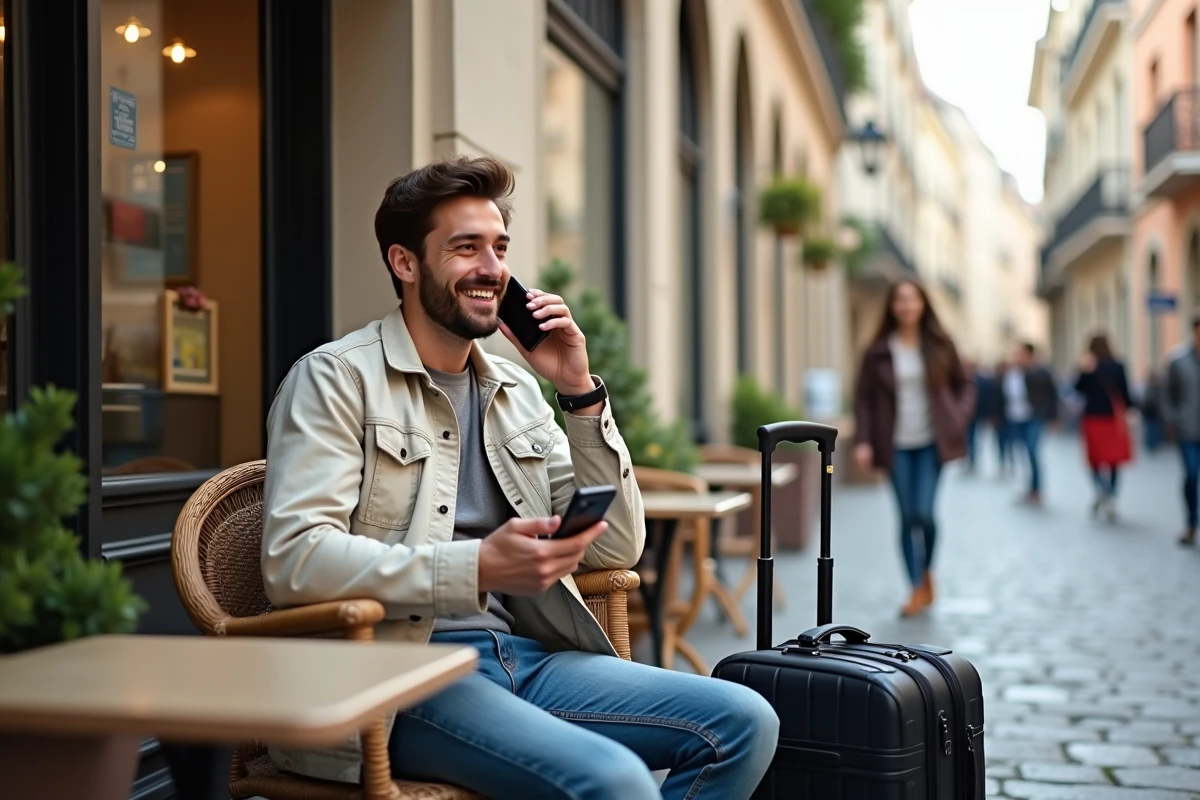
What alternatives are there to stay in touch without costs during your travels?
Communication across borders is no longer a technical headache, but a thoughtful choice. Telecom operators are multiplying options to limit the financial impact abroad. Some offer international plans that include calls or SMS, often with geographical limitations or quotas to monitor. Others add the possibility of using WiFi calls, provided the phone allows it and the subscribed contract includes it.
Purchasing a local SIM card remains a remarkably effective option for accessing the internet without fearing the shock of the bill. This choice appeals to regular travelers who want to ensure the receipt of messages, voice or video calls, and sending photos, without exposing themselves to roaming rates.
The question of security should not be overlooked. Using a VPN helps secure your exchanges, avoid interception risks on public networks, and even bypass certain geographical restrictions. A useful tool, whether on a business trip or vacation, especially when connecting to open networks in hotels, airports, or train stations.
To travel with peace of mind, a few reflexes are essential:
- Review the terms of your mobile contract before departure.
- Get a local SIM card for extended stays.
- Secure your exchanges with a VPN as soon as you connect to an open network.
Staying connected is possible. But it’s up to each individual to chart their path between practicality, cost control, and digital security. Borders may fall, but traps remain: it’s up to everyone to anticipate and turn the digital journey into real freedom.