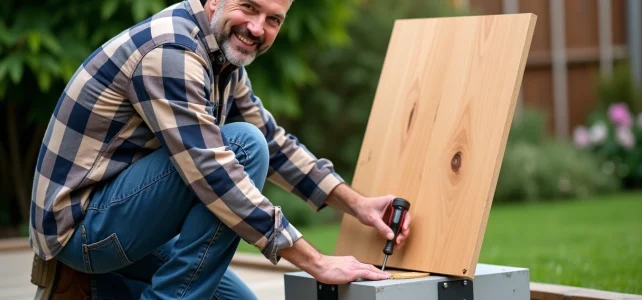
The stability of a vertical pallet depends less on the weight it supports than on the quality of its anchoring to the ground. Temporary fixings, often favored for their simplicity, frequently give way under the constraints of twisting and humidity.
Some assembly methods, long reserved for transportation or construction professionals, are actually accessible without specialized equipment. The risks of tipping remain high when insufficient attention is paid to alignment and distribution of supports. Only proven techniques can ensure reliable stability over time.
Why the stability of a standing pallet is essential for your projects
In every warehouse, the pallet stands as a logistical standard, whether it is a Euro pallet, a returnable pallet, or a classic wooden pallet. Its presence structures the space, regulates the movement of goods, and imposes its logic wherever it is set up. But as soon as the pallet changes orientation to stand upright, stability moves from the realm of technical details to a matter of safety. An unstable pallet opens the door to accidents: falling loads, injuries, interruptions of activity.
Each assembly requires special attention to official guidelines, construction standards, and the manufacturer’s instructions. It is impossible to take lightly the type of assembly, the strength of the wood, or the quality of the fixings. Whether setting up a garden, erecting a partition, or installing temporary storage, nothing replaces rigor in execution and adherence to rules.
To understand how to keep a pallet standing, one must consider the reality of the ground, exposure to shocks, and the layout of the site. Relying on reliable techniques significantly reduces the risks of tipping and extends the lifespan of the assembly. There is no room for approximation: the choice of pallet type, analysis of constraints, and precision of the action make the difference.
What techniques allow for securely anchoring a pallet to the ground?
Ground preparation and selection of fixings
First and foremost, the stability of a pallet begins with the choice of ground. A soft or uneven terrain compromises any attempt at vertical maintenance. A flat, compact, or concrete surface serves as an ideal base for securely fixing a pallet. To ensure reliable anchoring, various options are available:
- On concrete slabs, prioritize direct fixing with concrete screws and suitable anchors to securely connect the wooden pallet to the support.
- On less stable ground, using metal stakes or threaded rods passing through the pallet allows for deep anchoring into the ground.
- To erect a fence made of pallets, it is wise to connect the posts using hinges or brackets to create a stable, self-supporting structure.
Assembly and reinforcements
The choice of assembly technique depends on the project and the type of pallet. To increase stability, it is often recommended to assemble several pallets together, alternating their posts and reinforcing the joints with battens or thick boards. Using long screws or through bolts solidifies the whole and prevents any structural weakness. Checking the compliance of the elements used remains imperative, especially for returnable or specific pallets, to avoid any unpleasant surprises during use.
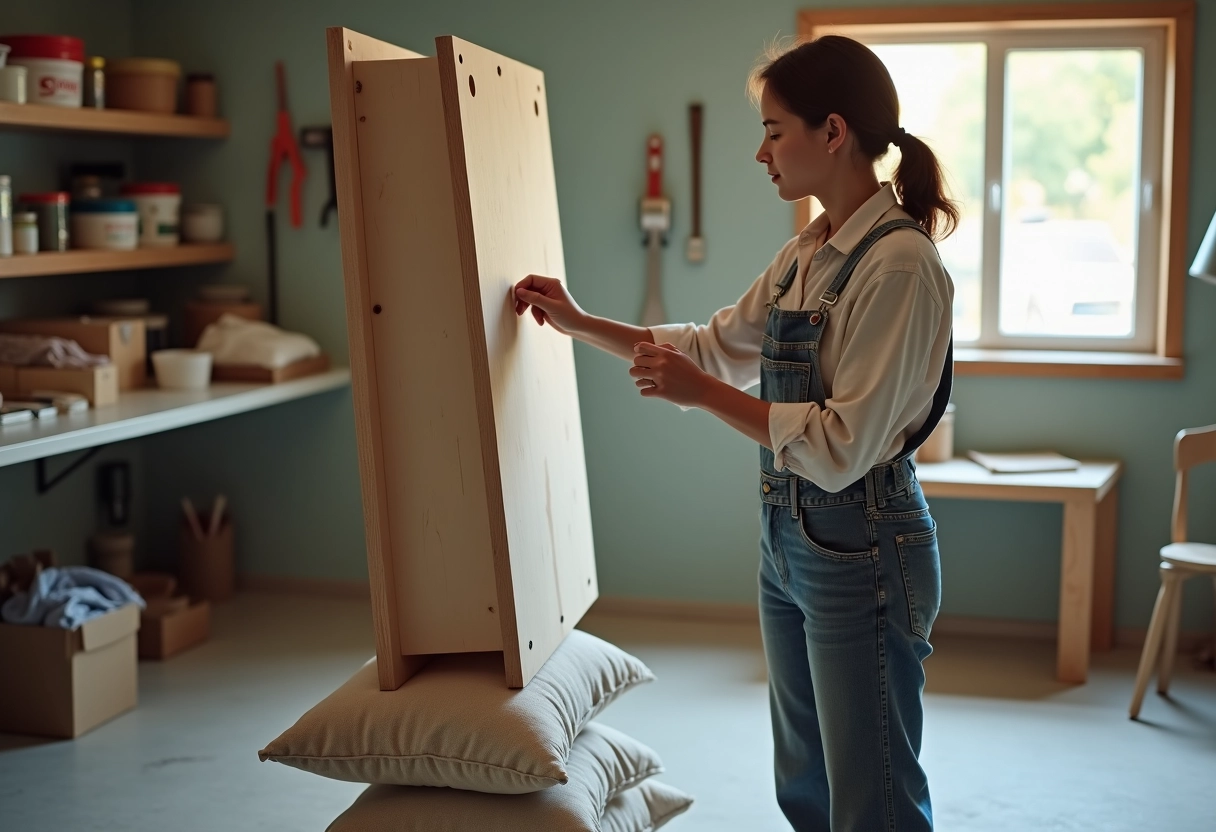
Focus on safe assembly methods and tips for durable support
Combining method and rigor for effective assembly
Keeping a wooden pallet standing is not magic, but relies on a clear method: analyze the type of pallet, strictly follow the manufacturer’s instructions, and equip oneself with a minimum of suitable tools. Especially for returnable pallets, whose structure requires additional precautions.
In an industrial environment or for outdoor arrangements, metal fixings are often the best solution. Installing galvanized steel brackets, securely screwed at right angles, offers remarkable resistance and reduces the risk of tipping. Plates, combined with lag screws or through bolts, serve as top-notch reinforcements for the stability of the assembly.
To choose the solution suitable for each configuration, here are some concrete alternatives:
- If the installation needs to remain temporary, metal stakes or threaded rods anchored deeply into the ground ensure effective support.
- For a durable setup, assembling several pallets with solid wood battens and increasing the points of contact with the ground guarantees better stability.
Each method adapts to the context and the expected load. Outdoors, it is wise to treat the wood against moisture to prolong the durability of the structure. A level helps control verticality, and if the project requires it, reinforcing the corners with additional brackets provides extra safety.
No detail is overlooked: the success of an assembly relies on attention to every detail, from the choice of fixings to the quality of materials. These tested and approved tips and techniques transform a simple pallet into a reliable element, ready to stand and endure, without faltering under the pressure of time or use.