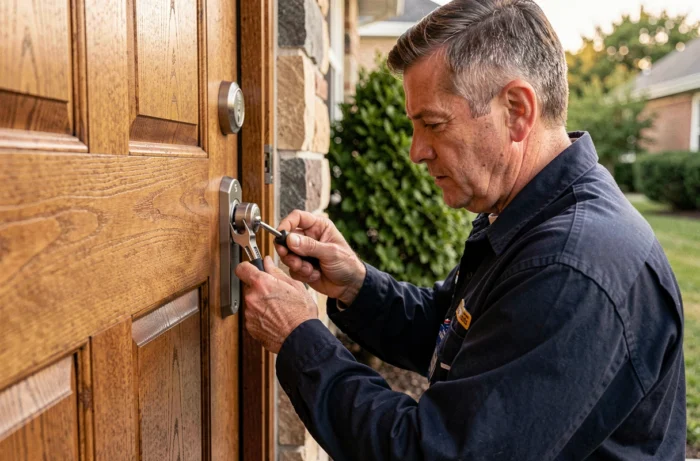
A burglar forcing an entrance door typically takes a few minutes to overcome a standard lock. If the lock resists beyond this threshold, the attempt is often abandoned. The entire logic of high-security locks is based on this principle: extending the resistance time to burglary to discourage intrusion. It is also essential to understand what the certifications truly cover and, above all, to avoid inconsistent combinations of cylinder, lock, and frame.
A2P Certification of Locks: What the Standard Covers and What It Ignores
It is often thought that a lock stamped A2P automatically protects the door. The reality on the ground is more nuanced. The A2P certification can separately apply to the cylinder, the lock, or the complete door unit. An A2P three-star cylinder mounted on a softwood frame will not deliver on its promises.
The A2P one-star, two-star, and three-star levels correspond to increasing resistance times during standardized laboratory tests. They are not guarantees of invulnerability but measured resistance thresholds under specific conditions.
For protection to be coherent, it is necessary to verify that the frame, the door leaf, and the hardware are also certified, particularly through the A2P BP1, BP2, or BP3 classes for door units. Without this verification, one might spend several hundred euros on a high-end cylinder that is useless against a fragile frame.
Before choosing a model, one can discover Serrurerie Valbusa online to compare the available certified ranges and their levels of protection.
Multipoint Lock or Reinforced Cylinder: How to Decide
The question arises systematically when securing an existing door. Should one replace the entire lock with a multipoint model, or simply change the cylinder for a high-security model?
The Cylinder: A Primary Target for Burglars
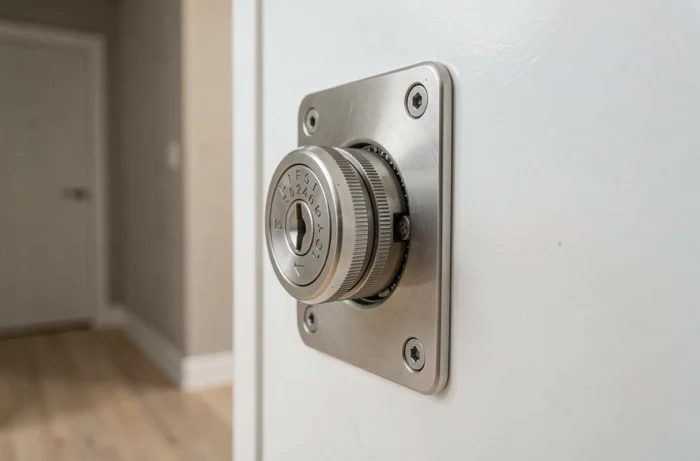
The European cylinder remains the most frequent target. Lock picking, bumping, pulling: the techniques are well-known and documented. A high-security cylinder incorporates anti-picking, anti-drilling, and anti-pulling protections. Replacing a standard cylinder with an A2P certified model is often the most cost-effective intervention on a door in good condition.
Be cautious about compatibility: the cylinder must exactly match the spacing and length of the existing lock case. Poor sizing creates a play that can be exploited by an extraction tool.
The Multipoint Lock for Structural Resistance
A multipoint lock (three, five, or seven locking points) distributes resistance along the entire height of the door. The bolts anchor into the frame at the top, bottom, and center, making forced entry with a crowbar much more difficult.
- Three-point models are suitable for most residential entrance doors and are often required by home insurance to cover theft.
- Five or seven-point locks are recommended for tall doors or particularly exposed access points (ground floor on the street, isolated area).
- The deadbolt (or security bolt) must have sufficient projection into the strike to resist pulling, a point confirmed as crucial by field feedback.
Replacing only the cylinder is not sufficient if the lock offers just one locking point. In this case, switching to a multipoint model is the priority.
Connected Locks and A2P Certification: A Still Unclear Area
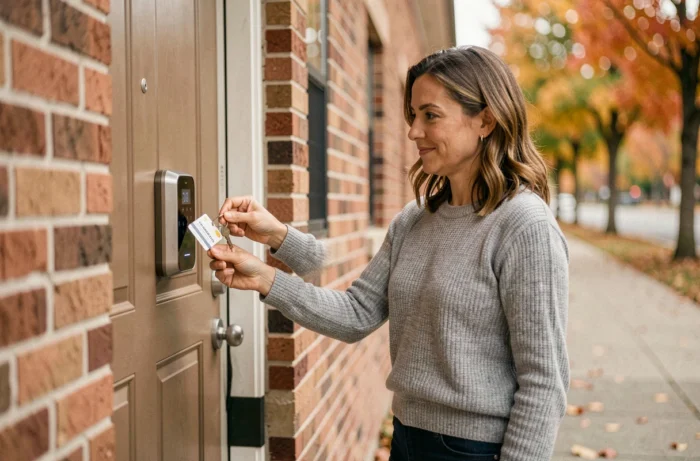
Connected locks are appealing due to their practicality: smartphone access, remote management of entries, entry history. On the ground, comparing them to certified mechanical locks remains challenging.
Standards like SKG or EN 1303 do not automatically mean that a product has the French A2P certification. Replacing the cylinder of an A2P lock with a connected model may void the initial certification. The manufacturer must explicitly validate the cylinder used to maintain compliance.
The A2P@ standard is beginning to address this issue. It evaluates both the mechanical resistance of the lock and the security of the digital solution, including communication protocols and hacking risks. For a main entrance door, it is recommended to check if the connected model being considered is covered by this standard before installation.
Home Insurance and High-Security Locks: Real Requirements
Many home insurance contracts impose a minimal level of protection to cover theft by burglary. In practice, this often translates into the requirement for a certified multipoint lock, sometimes accompanied by door reinforcement.
A lock that does not comply with the contract requirements may lead to a denial of compensation after a burglary. Before any replacement, reviewing the contract clauses helps identify the expected certification level.
Some insurers distinguish between the lock alone and the complete door unit. If the contract mentions A2P BP certification, a simple cylinder change will not suffice to be compliant. One will need to consider door reinforcement or a complete unit replacement.
Check the Consistency Between Lock, Frame, and Contract
On the ground, the most common situation is that of a tenant or owner installing a three-point lock without checking the condition of the frame. The original structure, especially in older buildings, sometimes presents play or structural weaknesses that negate the effectiveness of the lock.
- Ensure that the frame is securely fixed to the wall (metal anchors, no rotten wood).
- Check that the strike is reinforced (full-height strike for multipoint locks).
- Ensure that the door leaf is not too thin to accommodate the chosen lock case.
Feedback varies on this point, but a professional locksmith can identify these weaknesses in just a few minutes during an on-site diagnosis. The cost of this verification is marginal compared to the risk of an unsuitable installation.
Choosing a high-security lock is not just about buying the most expensive model. Effective protection depends on the coherence between the cylinder, the lock, the frame, and the insurer’s requirements. An on-site diagnosis before purchase remains the best investment to avoid unpleasant surprises.